Prince Rupert Gas Transmission
DEME has secured a contract from Allseas to carry out marine works on the Prince Rupert Gas Transmission (PRGT) Pipeline in British Columbia, Canada.
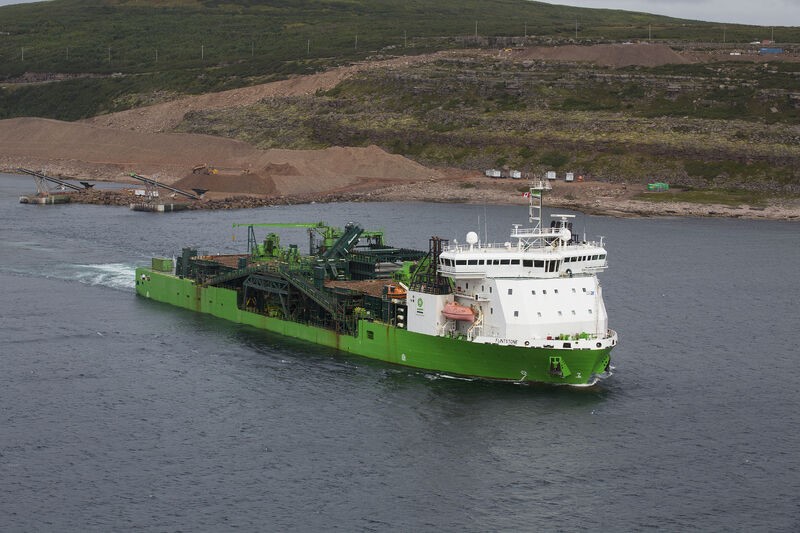
Allseas is the project’s main offshore contractor, and the pipeline is being developed by NW Infrastructure Limited Partnership, a joint venture between Western LNG and the Nisga’a Nation.
Once operational, the PRGT system will strengthen long-term energy security, support economic growth in British Columbia and provide a new export route for Canadian natural gas.
Under its subcontract with Allseas, DEME’s Offshore Energy segment will carry out marine works associated with the 50-kilometre offshore section of the pipeline, which covers both shallow and deep-water sections of the route and four landfall locations.
The Prince Rupert Gas Transmission Project comprises a pipeline of approximately 750 kilometres connecting the natural gas fields of north-eastern British Columbia to the planned Ksi Lisims LNG facility at Wil Mills on Canada’s west coast.
The route will comprise around 700 kilometres of onshore pipeline and 50 kilometres offshore.
DEME’s scope includes pre-trenching activities and all required landfall construction works at Nass Bay, Iceberg Bay, Nasoga Gulf, and Wil Milit.
This will also include pre-lay span rectification, route curve stabilisation, engineered and natural backfill, side-casting backfill using in-situ material, crab bridge construction and pipeline stabilisation, as well as post-lay span rectification.
Hugo Bouvy, Managing Director of DEME Offshore Energy, commented: “This new project in Canada draws on DEME’s extensive international experience of delivering complex offshore oil and gas projects in challenging marine environments. By combining specialised technical expertise with proven offshore execution capabilities, we are well positioned to successfully deliver these demanding works.”
DEME will carry out the work using a range of specialised dredging and offshore equipment, supported by crew transfer, survey and accommodation vessels. Preparatory work is expected to begin in 2027, followed by two offshore installation campaigns.
