General – Boulder Relocation
Inch Cape’s 18-month programme of offshore survey and boulder relocation is now complete, with a total of 26,402 boulders moved to clear the way for construction activity.
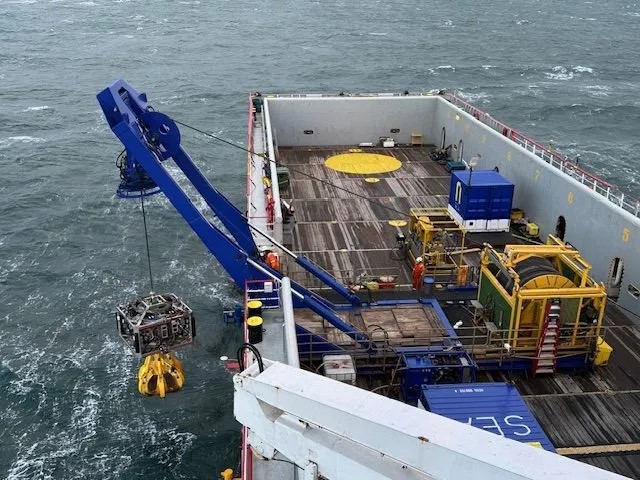
The boulders were relocated along the 85-kilometre export cable corridor, at the offshore substation platform, around each foundation location and along the 150 kilometres of array cable positions.
They were relocated within Inch Cape’s consented boundaries between three and 150 metres from their original location.
The boulder campaigns have been carried out to enable offshore construction activity including cable installation and burial, foundation installation, and wind turbine construction by jack-up vessel Wind Mover.
The mammoth number of boulders was relocated over several campaigns as part of the engineering, procurement, construction, and installation (EPCI) array cable contract Inch Cape awarded to TKF. The relocation teams were working 24/7 onboard marine contractor N-Sea’s multi-purpose vessels FS Aries, 4-Winds, and Pathfinder.
The initial geophysical surveys were carried out from modern hybrid survey and support vessel Geo Ranger to map and identify anomalies on the seafloor.
The boulders were left by glaciers retreating from the Firth of Forth during the last glacial period, which ended around 11,500 years ago, and their diameters ranged in size from 30 centimetres to 2.5 metres.
They were moved using specialised marine equipment, including remotely operated vehicles (ROVs) and auxiliary remotely operated vehicles (AUXROVs) fitted with boulder grabs. These grabs pick up the boulders and move them to a location outside the construction area.
N-Sea’s multi-purpose AUXROV system is designed for heavy-duty subsea tasks and can be equipped with various tools, including boulder grabs, excavators, and cutting tools.
The ROVs and AUXROVs were operated and monitored from a control room onboard each vessel known as the ROV container.
