Wind Energy – Floating Wind
China is breaking new ground in offshore renewable energy by developing a next-generation floating wind turbine with a projected capacity of 50 megawatts (MW).
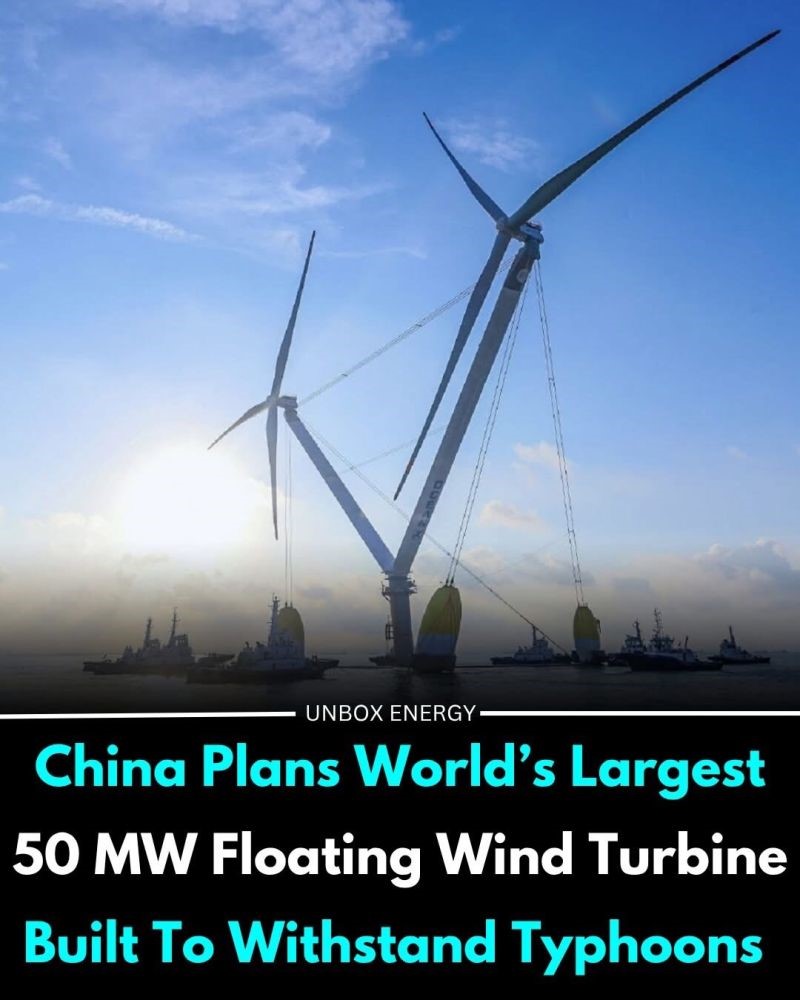
If realised, this would significantly exceed the output of most current offshore turbines, which typically range between 8 and 15 MW.
The design reportedly incorporates two 25 MW turbines mounted on a single floating platform supported by a V-shaped structure. This design aims to maximise energy generation while maintaining structural stability in challenging ocean conditions.
One of the biggest engineering challenges is ensuring that such a massive system can withstand extreme weather events such as typhoons, which are common in certain offshore regions. Floating platforms must be carefully engineered to remain stable when anchored in deep water.
Floating wind technology enables turbines to be installed in deeper seas, where wind speeds are stronger and more consistent, thereby increasing energy output compared to fixed-bottom systems.
Although still in development, projects like this demonstrate the rapid growth of renewable energy technologies and the increasing ambition to harness offshore wind on an unprecedented scale.
What do floating wind experts in other parts of the world think of this interesting concept?
