Wind Energy – Dreekant Site
IQIP is set to carry out the first full-scale offshore deployment of its EQ-Piling technology, marking a pivotal moment in the push for quieter and more efficient wind farm construction.
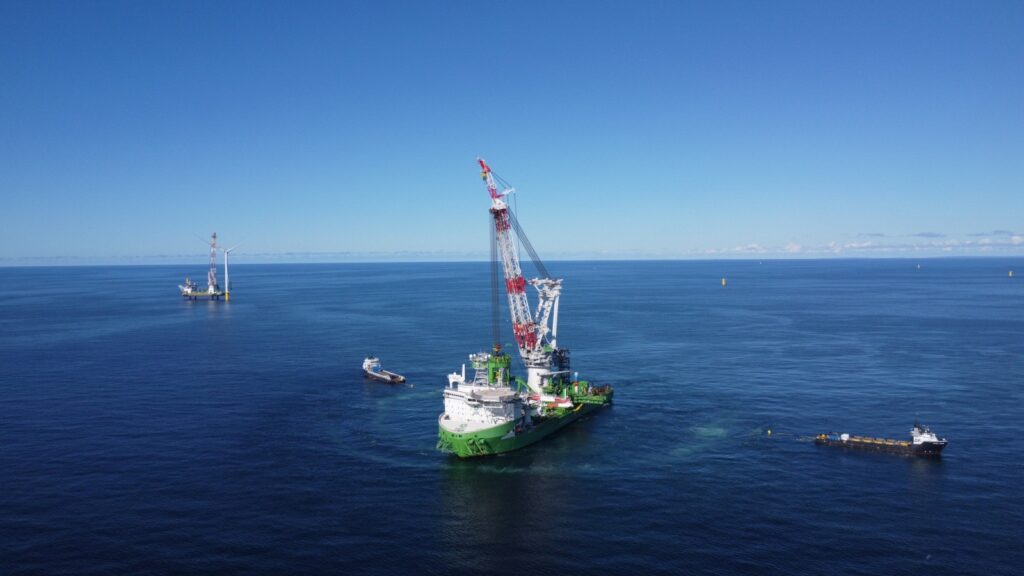
The demonstration will take place at the Dreekant offshore wind site, in collaboration with EnBW and Vattenfall.
The installation represents a major step toward commercial rollout following earlier nearshore trials at Rotterdam’s Maasvlakte 2.
Unlike conventional piling, which relies on rapid hammer strikes, IQIP’s method introduces a controlled energy transfer system designed to significantly reduce underwater noise.
At the core of the technology is a massive water-filled tank, holding up to 1,700 tonnes, that is hydraulically lifted and then released from a calculated height. Upon descent, the tank impacts a series of buffer cylinders, which gradually transfer the force to the monopile.
This extended impact duration, up to 15 to 20 times longer than traditional piling, results in a smoother energy application and notably lower noise emissions.
EnBW is hosting the full-scale test at its Dreekant development site as part of its strategy to advance next-generation foundation solutions. Meanwhile, Vattenfall, a consortium partner in the EQ-Piling initiative, will analyse performance data from the operation to evaluate its suitability for future offshore projects.
Project partners believe the trial will determine whether the technology can meet key industry benchmarks, including installation precision, operational efficiency, and strict environmental noise limits.
If successful, EQ-Piling could offer a scalable and lower-impact alternative to conventional piling methods.
The Dreekant offshore wind farm, with a planned capacity of 1 GW, is located approximately 120 kilometres northwest of Heligoland. EnBW secured development rights for the site in June 2024.
Approval procedures are expected to begin in 2027, with a final investment decision anticipated in 2029. The project is scheduled to become operational by 2032.
