Wind Energy – North Sea
4 out of 5 of the world’s largest offshore wind farms are in the North Sea.
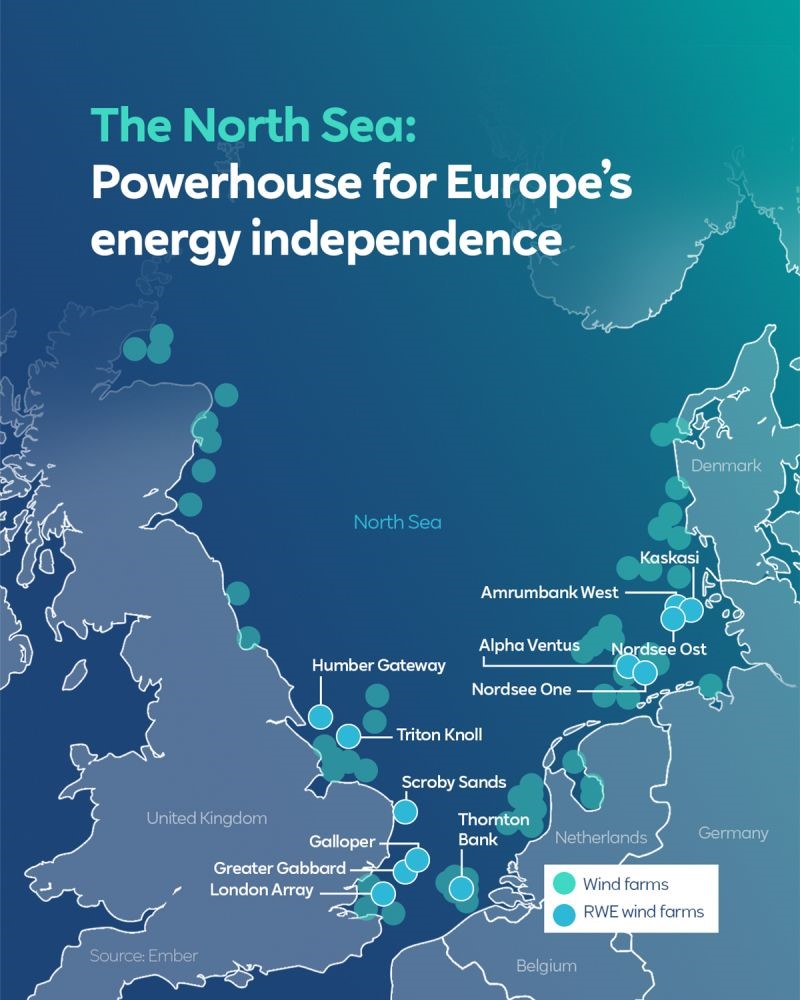
The North Sea is the largest offshore wind basin in the world, with 101 operational wind farms totalling 30 GW and a significant pipeline of projects under construction or in development, RWE’s CEO Sven Utermöhlen recently wrote on social media
RWE Offshore currently operates 12 wind farms in the North Sea. Its flagship projects under construction — Sofia, Thor, Nordseecluster, and Oranjewind — will significantly increase the capacity of its offshore fleet.
Offshore wind in the North Sea is therefore a strategic asset. If developed at scale, it can make Europe’s energy system more independent, more resilient and less exposed to geopolitical volatility. Reliable, domestic renewable power is the foundation of long-term competitiveness and stability.
But unlocking this potential requires more than national ambition.
Electricity does not stop at borders. Cross-border wind farms and more interconnections are essential to ensure that power generated offshore reaches the regions where it is needed most.
A fully meshed North Sea grid would increase security of supply and lower system costs for consumers across Europe.
At the same time, space is limited. Wake effects between turbines set physical limits to how densely offshore areas can be built. Simply adding more projects within national zones is not enough.
Europe needs coordinated maritime planning, intelligent site design, and shared infrastructure to use available sea space as efficiently as possible.
