General – Subsea Cable Project
This summer, Jan de Nul will begin the first of four similar subsea cable projects for client TenneT.
In total, Jan de Nul will transport, install, and protect 2,000 kilometres of cable, helping to bring green energy ashore.
Across these projects, the company will install three power cables and a fibre optic cable simultaneously, a first in the industry.
In addition, part of the installation will take place in the ecologically sensitive and intertidal Wadden Sea. For these reasons, the contractor invested in specialised, low-impact equipment. The company constructed a custom-built cable-laying barge and rebuilt its cable burial machine, Sunfish, to carry out the work.
For these projects, Jan de Nul will install three power cables and one fibre optic cable simultaneously for the first time, a milestone that is unprecedented in the sector. For a small part, the Belgian contractor will do so in the Wadden Sea, a unique tidal area. At low tide, large sections fall dry, and even at high tide, the water depth is often barely one metre. As a result, itscable installation vessels cannot operate there.
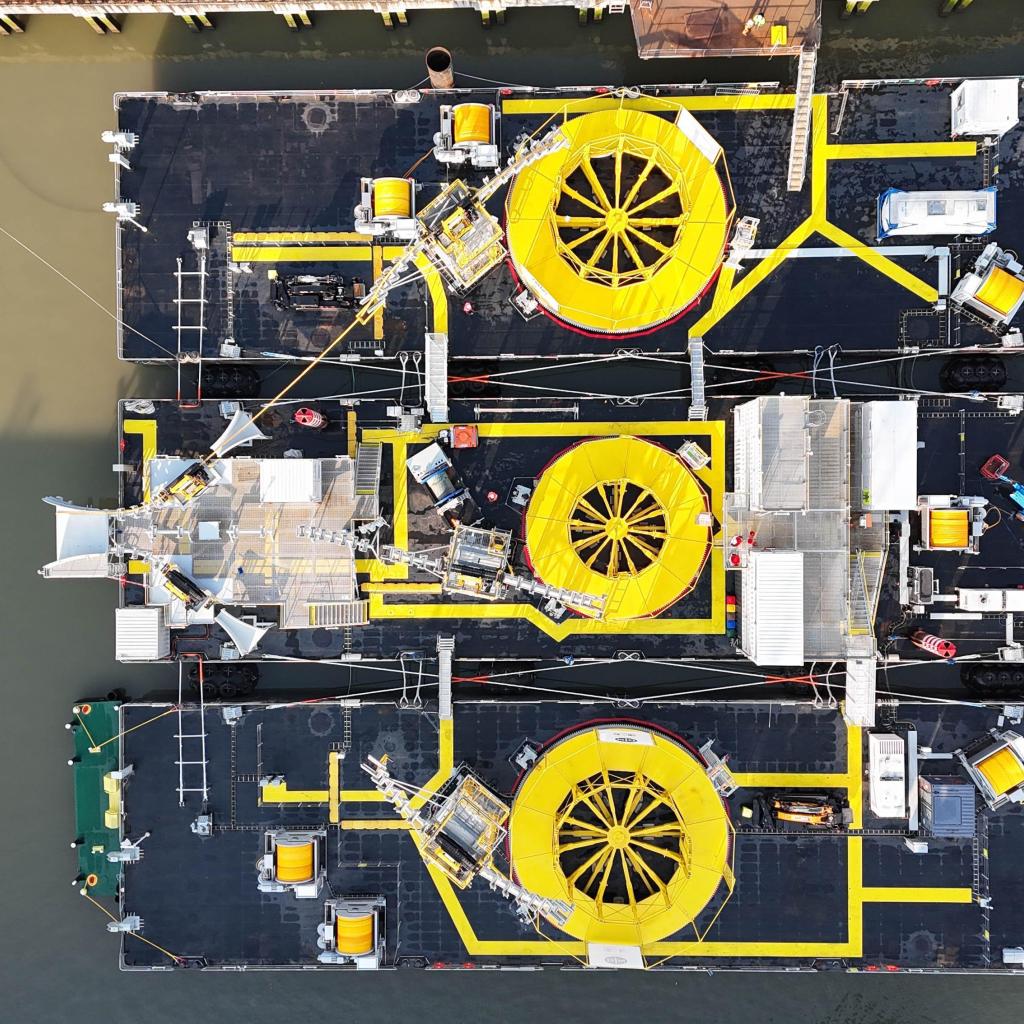
To install the cables in this area, Jan de Nul will deploy three, specially designed pontoons. These are connected to form one stable cable installation platform. Each pontoon is equipped with a cable carousel, allowing us to install the cables simultaneously on the seabed over a total distance of six kilometres. The contractor made all equipment on the pontoons as lightweight as possible to minimise the draft of the barges and the pressure on the seabed when grounding. The pontoons move using an anchor-handling system with central controls.
Cable-laying barge to work in the Wadden Sea
After completion of cable installation in the Wadden Sea in 2026, De Nul’s newest cable-laying vessels Fleeming Jenkin and William Thomson will install the offshore section of the cables in the deeper waters of the North Sea starting in 2027.
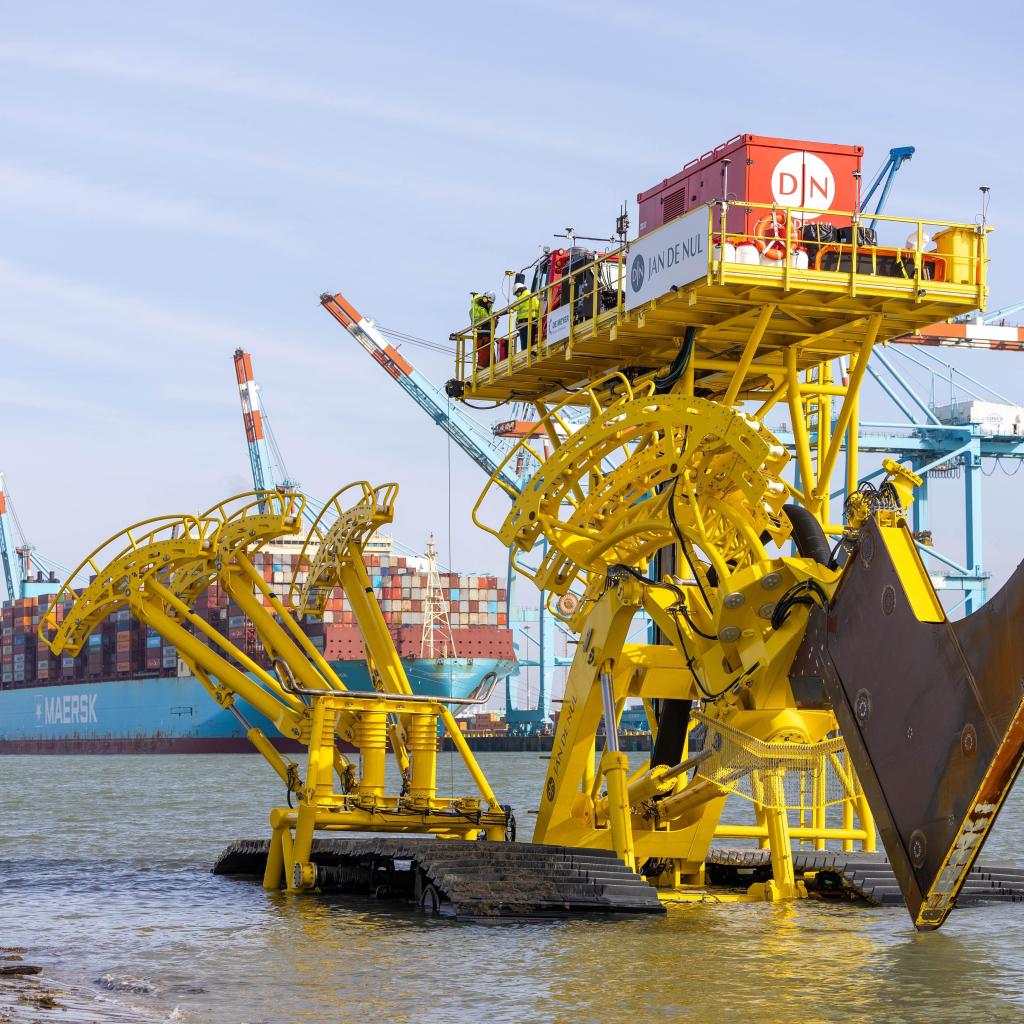
After installation, the cables are buried in the seabed using cable burial machine, Sunfish. The machine is specifically upgraded so it can bury three power cables and a fibre optic cable simultaneously while minimising the impact on the environment.
Thanks to its vibro sword, Sunfish buries cables into the seabed using high-frequency vibrations, a method that is much less invasive than traditional techniques like cutting or high-pressure jetting.
In addition, Jan de Nul widened the crawler tracks to three metres to better distribute the machine’s weight. This reduces the ground pressure of a 150-tonne machine to less than that of an adult person.
Jan de Nul invested in this specialised equipment for four of the most modern subsea export cable systems, which we will deliver together with our partners LS Cable & System and Denys under a long-term partnership with our client TenneT.
