General – Politics
European political and industrial heavyweights gathered in Antwerp last week for the Energy Industry Summit, a high-level meeting focused on one pressing question: how to restore and reinforce Europe’s competitive edge.
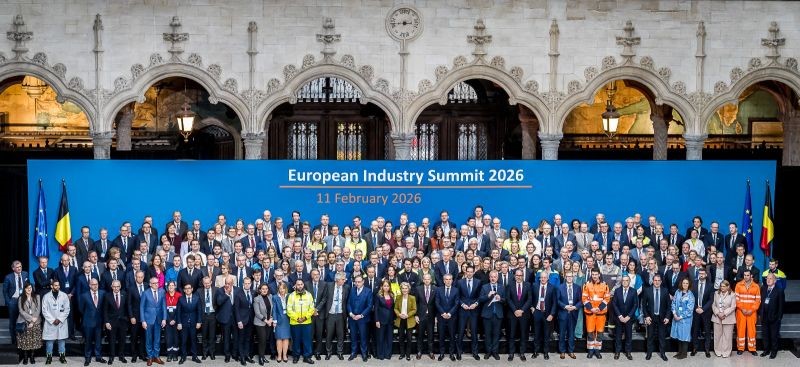
The Netherlands was one of the participating nations.
The message from the summit was clear. Affordable and abundant energy sourced from European soil is not a luxury—it is a precondition for industry, prosperity, and strategic autonomy.
Leaders stressed that a stronger internal market and a fully developed European capital market are essential to unlock the scale of investment needed.
Speed, however, emerged as the defining factor. If EU-wide harmonization stalls, a coalition of willing member states should move forward, ensuring momentum is not lost in protracted negotiations.
For the Dutch natural gas industry, three key themes discussed at the summit translate directly into practical action.
1. Building a functioning CO₂ storage market
The development of an effective carbon capture and storage (CCS) market rests primarily with member states. While European frameworks provide guidance, national leadership and execution will determine whether projects move from blueprint to reality. This requires clear policy direction and close cooperation with the Ministry of Climate Policy and Green Growth and the state energy company Energie Beheer Nederland.
2. CBAM as a safeguard for fair competition
The Carbon Border Adjustment Mechanism (CBAM) was firmly positioned as a tool to prevent unfair competition from regions with less stringent climate policies. A level playing field is considered essential to safeguard investments in cleaner production within Europe.
3. Faster permits, less red tape
Accelerating permitting procedures and reducing regulatory burdens were highlighted as critical to delivering energy projects on time. This includes natural gas production and CO₂ storage initiatives in the North Sea – projects seen as vital to Europe’s energy transition and security.
As discussions concluded in Antwerp, one takeaway stood out: Europe’s industrial future will hinge not only on ambition, but on decisive execution.
