General – Jacket Construction
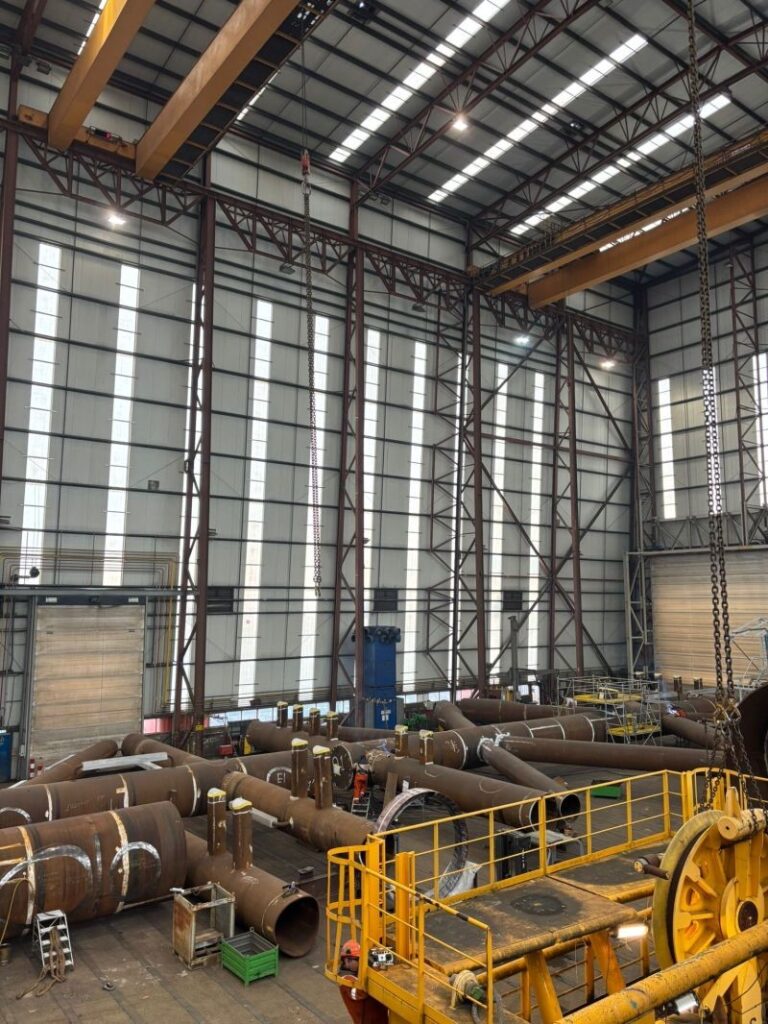
At the Heerema Fabrication Group yard in Vlissingen, a massive piece of steel engineering is currently taking shape: the foundation for the Zeevonk offshore substation.
The platform will be the first in a series of new 2GW connections that TenneT will be realising in the Dutch and German North Sea in the coming years.
This innovative standard makes it possible to transport large quantities of sustainable energy to land efficiently and with fewer platforms and cables. Known as a ‘jacket’, this structure is the backbone of offshore wind energy, and recent work has focused on making sure it is ‘plug & play’ ready before it ever touches the water.
Construction is already in full swing, with the giant legs and braces being welded together for a scheduled move to the North Sea in the summer of 2027.
To understand the scale of this project, one only needs to look at the numbers: when finished, the jacket will weigh 13,000 tons.
Beyond being a support pillar, the jacket also serves as a protective gateway for the electricity. It contains J-tubes: long, J-shaped steel pipes that act like giant straws. These tubes guide the electrical cables from the seafloor safely up into the substation, shielding them from the waves and currents.
The bellmouths mentioned earlier are the flared openings at the bottom of these tubes, designed to prevent the cables from bending too sharply or rubbing against the steel. By preparing all these internal pathways now in Vlissingen, the transition to green energy becomes a much smoother process once the structure is installed miles away from the coast.
Zeevonk is a joint venture between Vattenfall and Copenhagen Infrastructure Partners (CIP). The first Zeevonk wind farm is expected to deliver the first energy by 2029.
