Fossil Energy – Treaty
The Netherlands and Germany have signed a bilateral treaty on the joint and responsible exploitation of hydrocarbon fields in the territorial waters north of the Ems-Dollard area.
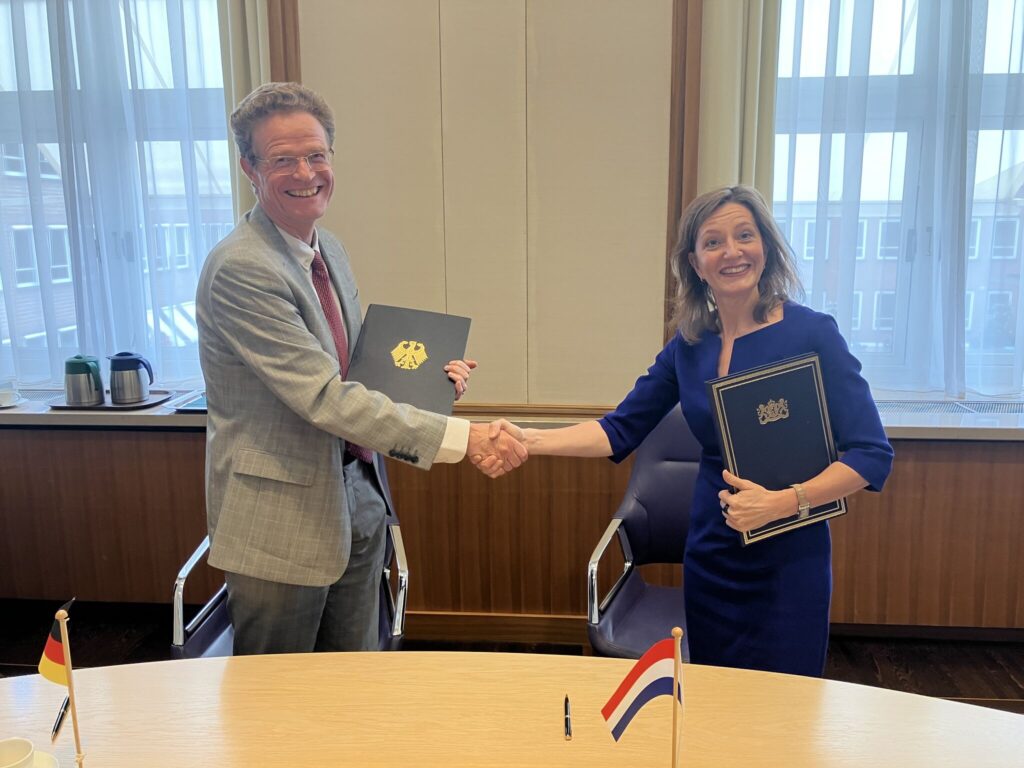
The agreement sets out arrangements between the two countries regarding the distribution of expected gas volumes from German-Dutch fields, the allocation of production costs and revenues among license holders, and the sharing of state revenues from gas extraction.
The signing of this treaty underscores the government’s commitment to safeguarding the security of gas supply for households and businesses. Production from these fields will not only strengthen the energy security of the Netherlands and its neighbouring countries but will also contribute to a more robust European gas market.
Security of supply and access to affordable, clean energy are crucial for the Netherlands, Germany, and Europe as a whole in maintaining prosperity, supporting industry, ensuring future economic resilience, and preserving competitiveness. The two countries are closely linked in the energy sector and pursue common energy and climate objectives. In addition to operating an integrated energy infrastructure, they cooperate closely on supply security and share ambitions in the development of offshore wind energy and hydrogen.
The company ONE-Dyas will operate the N05-A platform to produce gas from the N05-A field and potentially other connected fields within the broader Gateway to the Ems (GEMS) region. Current estimates suggest that the N05-A field, together with surrounding GEMS fields, could yield approximately 50 billion cubic meters of natural gas over the next 20 years.
In line with sustainability objectives, the platform will be powered by green electricity from the nearby German Riffgat wind farm and has been constructed at a lower height to minimize visibility from the coast. This approach enables gas production in a comparatively clean manner while taking into account the surrounding environment.
